Common misconceptions
What Episcopal ethos does not mean
- Christian nationalism
- Religious indoctrination
- DogmaticThere are two pieces of dogma: the Trinity and the Incarnation.
- Exclusive
- Focused on converting or “saving” individualsThis matters most in how we treat other faith traditions.
Supersessionism
Supersessionism is the claim that the Church replaced Israel as God’s people. We actively teach against it.
The Episcopal Church identifies supersessionism as the root of anti-Judaism and teaches that God’s covenant with both the Church and the Jewish people continues.
Faith and learning
Faith and intellect belong together
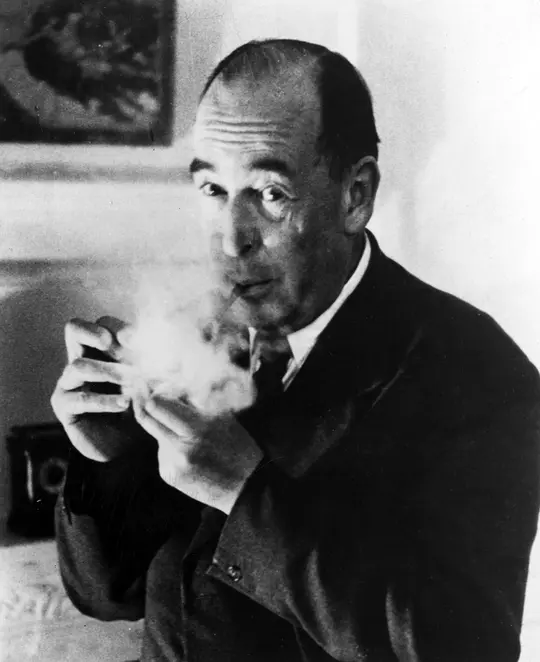

“I believe in Christianity as I believe that the sun has risen: not only because I see it, but because by it I see everything else.”
Faith gives us a way to see the world and leaves room for hard questions.
How Anglicans weigh authority
Scripture, tradition, and reason
Anglicans draw on three sources of authority. This approach is commonly associated with Richard Hooker (1554–1600) and Of the Laws of Ecclesiastical Polity.
Scripture
- Take Scripture seriously. That does not require reading every passage literally.
- Read it in context. The Bible contains different voices and tensions, so it cannot be the only source of authority.
Tradition
- Learn from the wisdom, worship, and practices handed down through the Church.
- Tradition is an ongoing conversation across generations, and it can change.
Reason
- Use intellect, experience, science, and new learning when considering questions of faith.
- Consider what love, justice, and human dignity require now.
Anglicans use all three, though one may carry more weight depending on the question.
Scripture, tradition, and reason allow the church to reconsider inherited positions.
Michael Curry on love
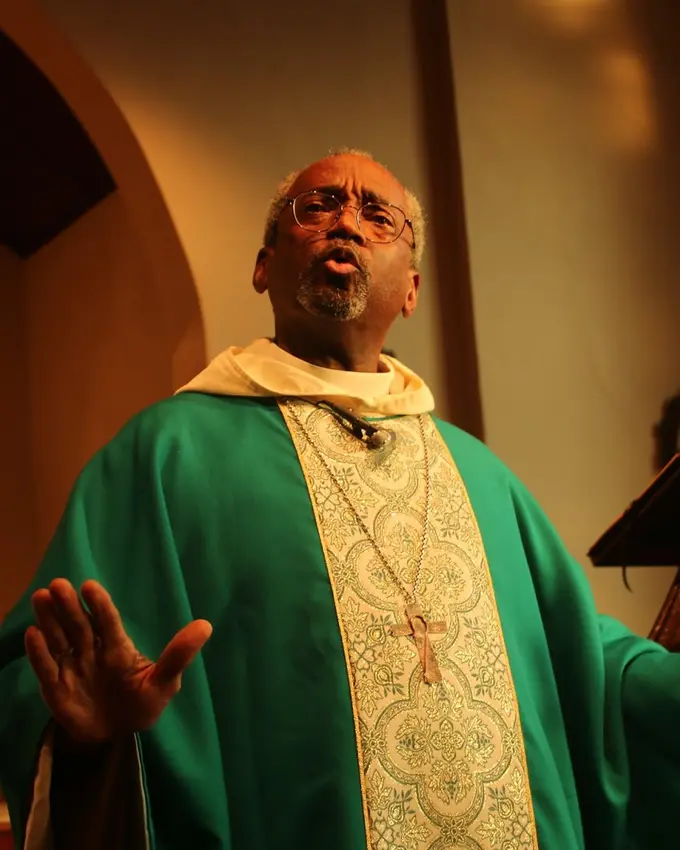

“If it’s not about love, it’s not about God.”
Michael Curry, 27th Presiding Bishop of The Episcopal Church (2015–2024). He returned to this line throughout his ministry, including in his book Crazy Christians (2013).
From the Book of Common Prayer
The Baptismal Covenant
Every Episcopalian makes and renews these vows. They appear on pages 304–305 of the Book of Common Prayer and describe what it means to follow Christ.
- Will you continue in the apostles’ teaching and fellowship, the breaking of bread, and the prayers?
- Will you persevere in resisting evil, and, whenever you fall into sin, repent and return to the Lord?
- Will you proclaim by word and example the Good News of God in Christ?
- Will you seek and serve Christ in all persons, loving your neighbor as yourself?
- Will you strive for justice and peace among all people, and respect the dignity of every human being?
Each question has the same answer “I will, with God’s help.”
Local Episcopal history
Close to home
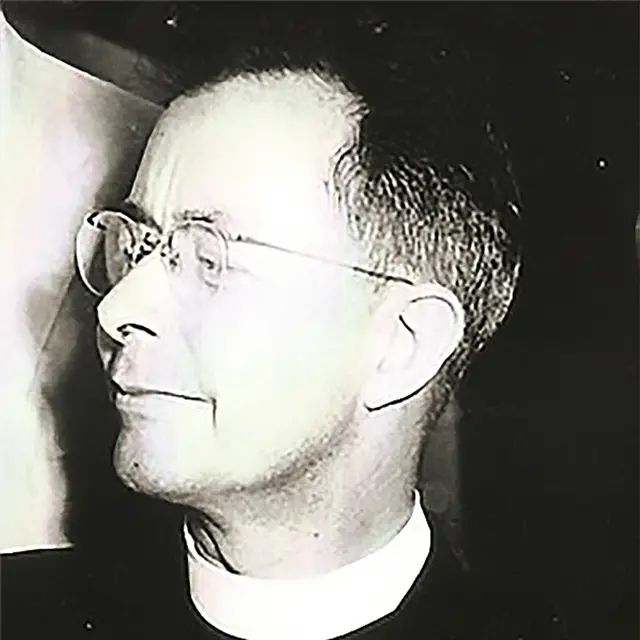
June 25, 1973
After the UpStairs Lounge fire
On the night of June 24, an arsonist set fire to the UpStairs Lounge on Iberville Street. Thirty-two people died. It was the deadliest attack on LGBTQ people in American history until the Pulse nightclub shooting in 2016.
Almost every church in the city refused to hold funerals. Father Bill Richardson, rector of St. George’s, opened the church for a prayer service attended by about eighty people.
Bishop Iveson Noland publicly reprimanded Richardson after receiving more than a hundred complaints. Hate mail filled Richardson’s mailbox, and the vestry voted to demand his resignation.
Richardson did not resign. He continued serving at St. George’s for years.
The diocese recounts the episode in Do the Right Thing: A Lesson From the Upstairs Lounge Arson. It puts the three-legged stool in concrete terms: Richardson’s reading of the Covenant put him at odds with the institution he served.
New Orleans Historical: Upstairs Lounge Fire, 1973: In Memoriam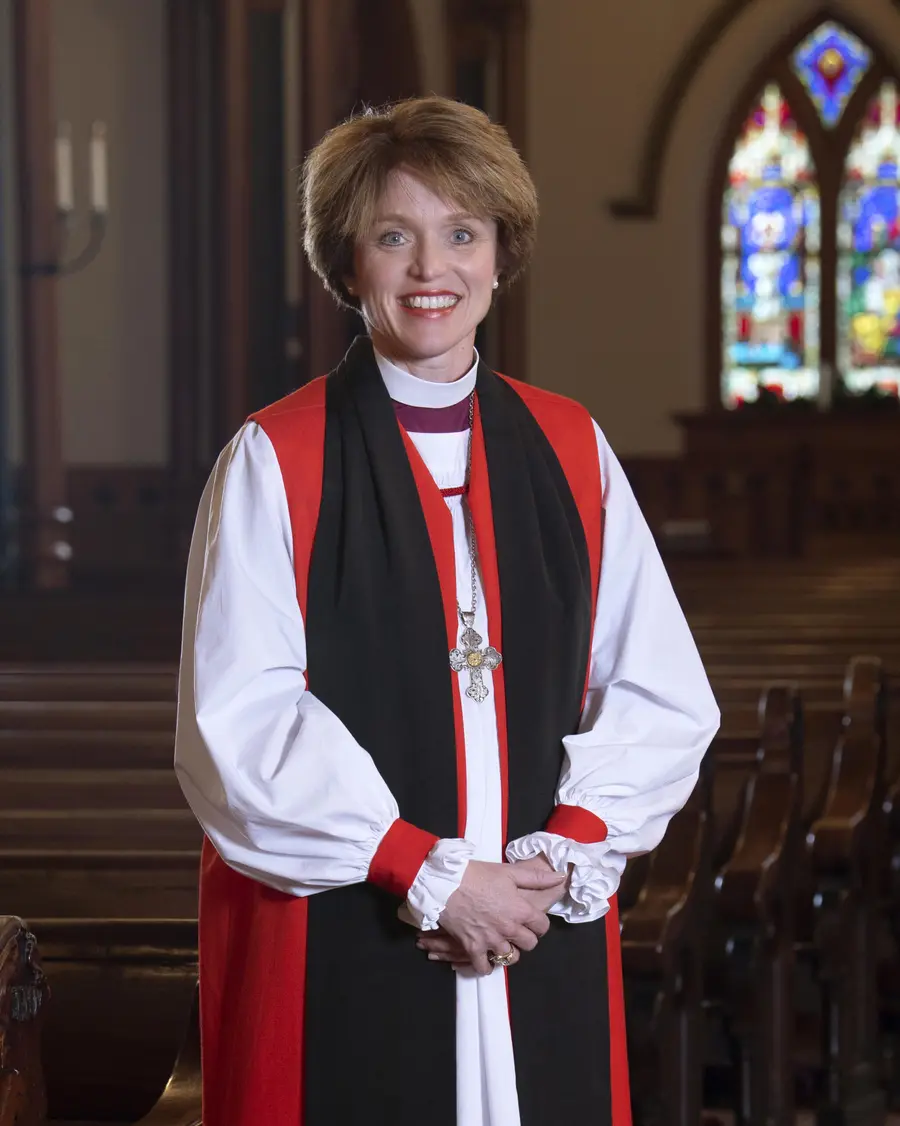
Bishop Shannon Duckworth
The bishop who couldn’t be an acolyte
The Rt. Rev. Shannon Rogers Duckworth was elected 12th Bishop of Louisiana on the first ballot in May 2022. She was consecrated that November at Christ Church Cathedral and received the crozier from her predecessor, Morris Thompson Jr. The diocese was organized in 1838; Duckworth is the first woman to serve as its bishop.
She tells students that she wanted to be an acolyte in sixth grade, but girls were not allowed to serve. She became an acolyte in seventh grade and continued through high school.
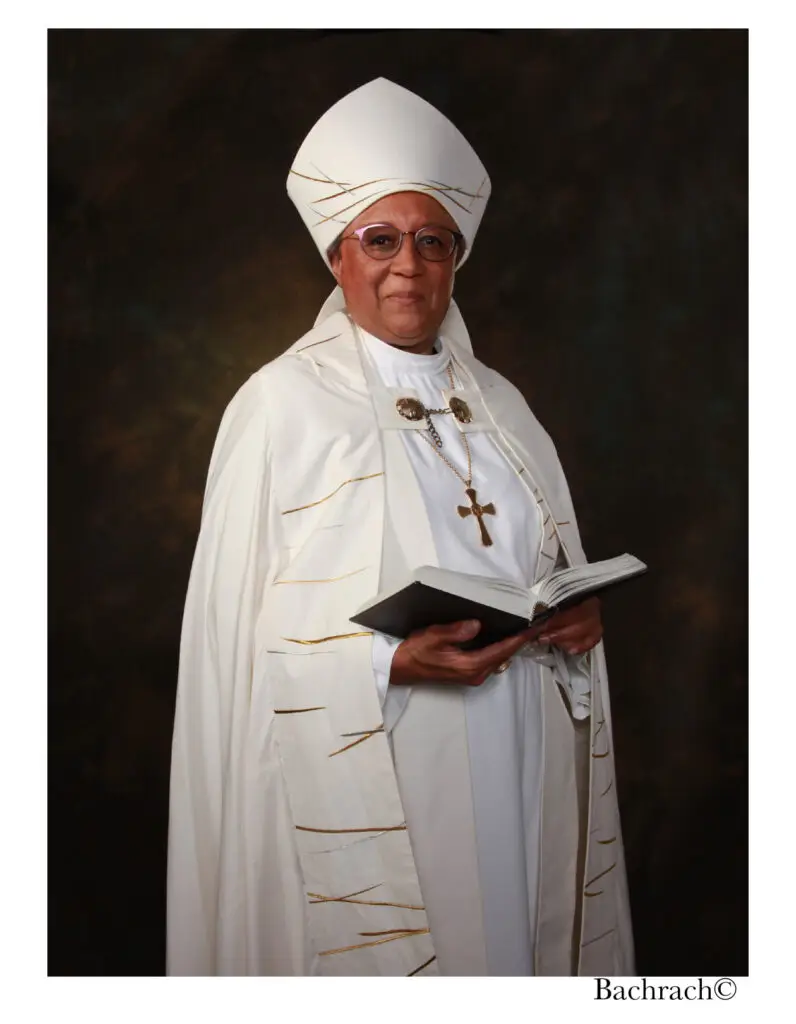
Bishop Phoebe Roaf
Mother Phoebe
Before seminary, The Rt. Rev. Phoebe Roaf studied at Harvard and Princeton, clerked for the Fifth Circuit, and spent five years as a commercial real estate attorney in New Orleans. In 2008, she became the first Black woman ordained as a priest in the Diocese of Louisiana and the first person of color to serve as a priest at Trinity Episcopal.
She is now Bishop of West Tennessee and among the first Black women to become a bishop in The Episcopal Church. Her brother Willie is in the Pro Football Hall of Fame. Their mother was the first Black woman on the Arkansas Supreme Court.
For the classroom
Using the Covenant in a teaching decision
These three promises are especially relevant in a classroom:
Love your neighbor as yourself.
Strive for justice and peace among all people.
Respect the dignity of every human being.
When a decision is hard, ask whether each option respects the dignity of every person in the room. School policy matters, but it does not answer every question.
Sources